



Safety Notes
Transport and storage vehicles must be clean, dry, and must not be stacked with goods that are wet, have strange odors, etc., affecting the quality of sugar. Used directly in the home in food and beverage processing or as raw materials in the pharmaceutical manufacturing, food processing, canned food industries: cakes, candy, milk, soft drinks, instant foods, etc. Sugar water after filtering 2 is then finely filtered 1 again to remove finer impurities called safe filtration I. Sugar water after safe filtration I is passed through Ion exchange resin columns to separate chromophore ions. After ion exchange, the sugar water is filtered 2 (safe filtration II) into purified sugar water.
Confirm the specifications and safety instructions in the technical documentation for each batch before use.
Original Information and Warnings to Verify
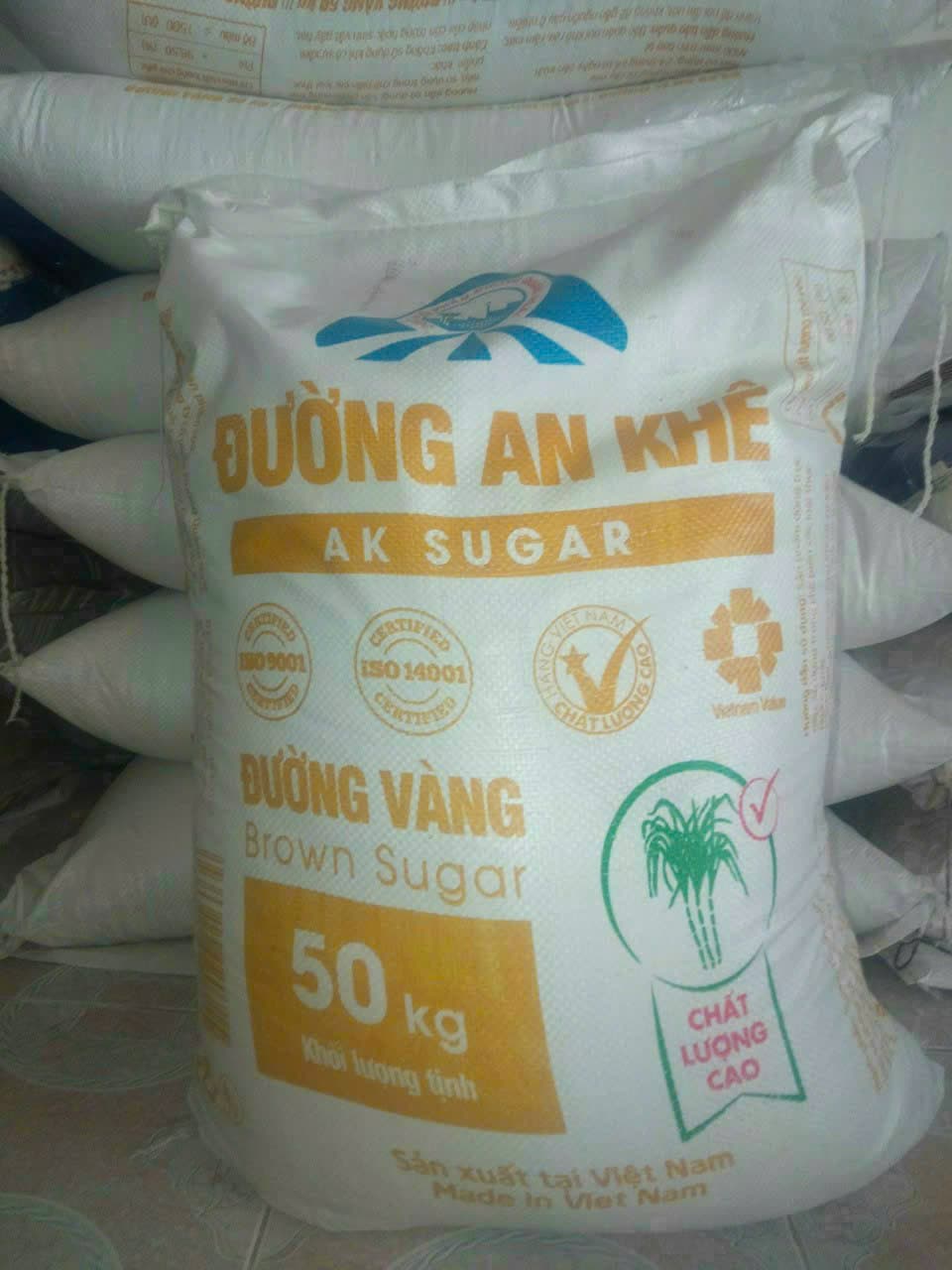
1- Technical standards: 1.1 Sensory indicators: As announced by the manufacturer of An Khe Sugar Factory, Quang Ngai. No. Criteria Regulation level 1 External state Relatively uniform crystals, dry, no lumps. 2 Taste Sugar crystals as well as sugar solution in distilled water have a sweet taste, without any strange smell or taste. 3 Color Sugar crystals are white to bright white. When mixed in distilled water, the sugar solution is transparent. 1.2 Physical and chemical indicators: According to the manufacturer's announcement No. Indicator Unit of measurement Specified level 1 Pol o Z ≥ 99,80 2 Reducing sugar content % ≤ 0,03 3 Conductive ash % ≤ 0,03 4 Moisture % ≤ 0,05 5 Color level ICUMSA ≤ 20 1.3 Microbiological criteria: Compliant with national standards TCVN 7270: 2003: White sugar and refined sugar - hygiene requirements: Microorganisms No. Criteria Unit Maximum level 1 Total number of aerobic microorganisms CFU/10g 200 2 Total number of yeast spores CFU/10g 10 3 Total number of mold spores CFU/10g 10 1.4 Heavy metal criteria: Compliant with National Technical Regulations on limits of heavy metal contamination in food: QCVN 8-2/2011/ BYT No. Criteria Unit Maximum level 1 Lead content mg/kg 0,5 2 Mercury content mg/kg 0,05 3 Cadmium content mg/kg 1 4 Arsenic content mg/kg 1 1.5 Unwanted chemical content: Conforms to national standards TCVN 7270: 2003: White sugar and refined sugar - hygiene requirements: SO residue 2 No. Criteria Unit of calculation Maximum level 1 SO content 2 mg/kg 2 1.6 Fungal toxin content: QD 46-2007/BYT – Regulations on maximum limits of biological and chemical contamination in food. No. Criteria Unit of calculation Maximum level 1 Aflatoxin B1 μg/kg 5 2 Aflatoxin B1B2G1G2 μg/kg 15 2- Composition: Saccharose No food additives are used in the production process. 3- Shelf life: Two years from the date of manufacture, date of manufacture, and expiration date printed on the packaging. 4- Instructions for use and storage: When transporting and storing, the sugar bag must be carefully covered, taking care not to tear the outer or inner bag. Transport and storage vehicles must be clean, dry, and must not be stacked with goods that are wet, have strange odors, etc., affecting the quality of sugar. The lines in the warehouse must be kept in a dry, clean place, not placed directly on the floor and at least 50cm away from the wall. Used directly in the home in food and beverage processing or as raw materials in the pharmaceutical manufacturing, food processing, canned food industries: cakes, candy, milk, soft drinks, instant foods, etc. 5- Packaging material and packaging specifications: Weight: 50 kg/bag Packaging: PP, PE bags. Net weight error according to decision 02-2008/QD-BKHCN dated 25/02/2008 of the Ministry of Science and Technology. 6- Production process and process explanation: Detailed explanation of the production process: Raw sugar is imported from the raw sugar warehouse through a quantitative weighing system, then through the Aff making system and centrifuged to separate the honey film layer outside the sugar crystals. Sugar after making Aff is dissolved and pumped to the lime machine and then passes through the carbonation columns. Here, CO 2 is separated from the flue gas through the gas cleaner and bubbled into the sugar solution to form calcium carbonate precipitate with lime to adsorb impurities and colorants in the sugar solution. The sugar solution is then sent to the first filter to remove calcium carbonate precipitates. Clean sugar water after the first filter is passed through an absorption device with Activated Carbon to further absorb the colorants, then filtered 2 to separate the Activated Carbon. Sugar water after filtering 2 is then finely filtered 1 again to remove finer impurities called safe filtration I. Sugar water after safe filtration I is passed through Ion exchange resin columns to separate chromophore ions. After ion exchange, the sugar water is filtered 2 (safe filtration II) into purified sugar water. Refined sugar water is evaporated and concentrated then crystallized (sugar cooking). The raw sugar obtained after the crystallization process is sent to the centrifugal system to separate bile and crystal sugar. After centrifugation, the crystal sugar is dried, cooled, then passed through a sorting system and stored in silos before being packaged in finished products. For Purchases, Contact: PHU THINH SERVICE TRADING COMPANY LIMITED (VIEN PHU THINH SERVICE TRADING COMPANY LIMITED) Address: 432A/40/29 Duong Ba Trac, 1 ward, 8 district. Ho Chi Minh City Hotline: 0906.733.038 Email: hoachatphuthinhvien@gmail.com Website: https://hoachatphuthinh.vn/ PHU THINH is a reputable supplier, a reliable partner accompanying your success!