


Safety Notes
These oxidation reactions often convert toxic substances into non-toxic substances. Chlorine Nippon 70% free (Cl2, HOCl and OCl-) remaining in water will be toxic to aquatic organisms. In an environment rich in nutrient salts, ROCL reacts with substance NH3 to form compounds of Chlorine Nippon 70% (NH2Cl, NHCl2 or NCl3), these compounds are stable, have a long shelf life and are also toxic to organisms. Trihalomethanes are compounds that are harmful to aquatic life and are harmful to humans. They are considered one of the causes of cancer in humans and animals. Do not use chlorine when the pond water is rich in nutritional salts and organic matter in the middle and end of the farming season.
Confirm the specifications and safety instructions in the technical documentation for each batch before use.
Original Information and Warnings to Verify
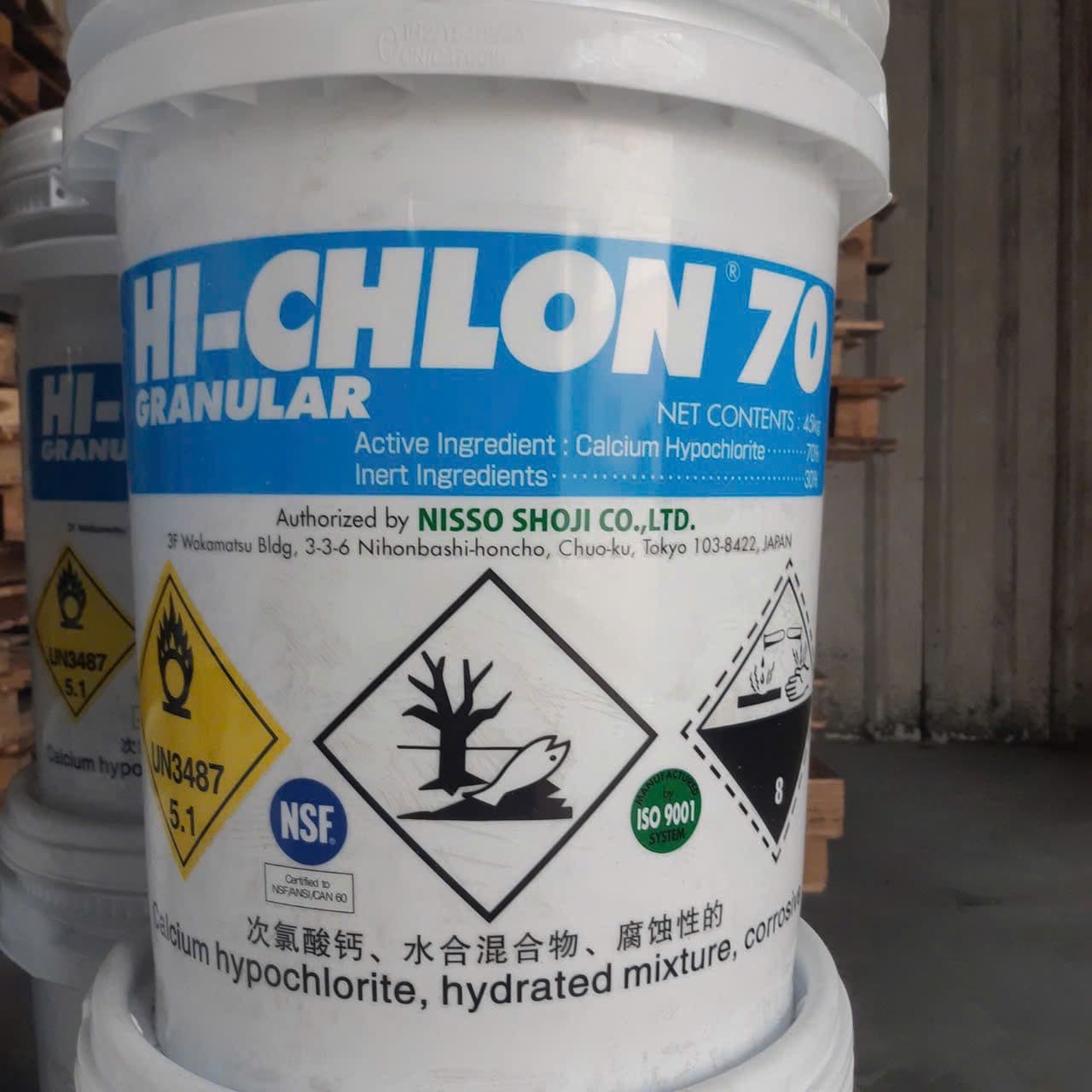
Japanese Chlorite (Nippon) -Japanese Chlorite- Nippon Chlorite Product: Chlorine - https://hoachatphuthinh.vn/san-pham/chlorite-nippon-caclo2.html Chemical formula: Ca(ClO)2 Common name: Japanese Chlorite (Nippon) -Japanese Chlorite- Nippon Chlorite Origin: Japan Packaging: 45 kg/barrel Model Description: Translucent white granules or white powder Content: 70.0%min. Uses / Applications: Chlorine Nippon is used in industries such as: fisheries, veterinary medicine, water treatment, textile, paper industry... Chlorine Nippon 70% also has the effect of oxidizing inorganic reducing ions and organic compounds. These oxidation reactions often convert toxic substances into non-toxic substances. To oxidize 1mg/L H2S, Fe2+, Mn2+ and NO2- need Use 8,5 mg/L, 0,6 mg/L, 1,3 mg/L and 1,5 mg/L of Cl, respectively. Therefore, the presence of organic and inorganic reducing compounds in water increases Nippon Chlorine dosage 70% when disinfecting. Chlorine Nippon 70% free (Cl2, HOCl and OCl-) remaining in water will be toxic to aquatic organisms. The maximum allowable concentration of free Chlorine Nippon 70% for aquatic organisms is 0,01 mg/L. At the concentration 0,1 mg/L, Chlorine Nippon 70% free chlorine can kill most marine plankton and free chlorine chemical concentration 0,37 mg/L can lead to fish death. Therefore, after disinfection, we should remove chlorine chemicals or we should aerate strongly for about 3-5 days before stocking fish and shrimp. Chlorine Nippon 70% can be removed after disinfection with chemical Na2S2O3. If we want to remove 1 mg/L Cl, we need to use 6,99 mg/L chemical Na2S2O3. In an environment rich in nutrient salts, ROCL reacts with substance NH3 to form compounds of Chlorine Nippon 70% (NH2Cl, NHCl2 or NCl3), these compounds are stable, have a long shelf life and are also toxic to organisms. The chloramine compounds contained in Chlorine Nippon 70% have the same effect as NO2-, these substances react with Hemoglobine to form Methemoglobine, causing brown blood disease, and reducing the blood's ability to carry oxygen. Therefore, it should not be used. Using chlorine chemicals to kill algae and disinfect ponds, chlorine chemicals will reduce birth growth and survival rate of fish if not cleaned before releasing fish. In environments rich in organic matter, HOCl will react with CH4 and other elements in water to form Trihalomethane compounds (CHCl3, CHCl2Br, CHClBr2, ...). Trihalomethanes are compounds that are harmful to aquatic life and are harmful to humans. They are considered one of the causes of cancer in humans and animals. The US EPA sets a limit for Trihalomethane content in water sources after chlorine chemical treatment, which must be less than 80 µg/L. In summary, in what cases should we use Chlorine Nippon 70%? As we can see above, chlorine is especially effective for killing bacteria and small groups of organisms. For spores of microorganisms and viruses, the killing effect is not high. We should only use chlorine chemicals to disinfect water sources at the beginning of the farming season. Do not use chlorine when the pond water is rich in nutritional salts and organic matter in the middle and end of the farming season. For Purchases, Contact: PHU THINH SERVICE TRADING COMPANY LIMITED (VIEN PHU THINH SERVICE TRADING COMPANY LIMITED) Address: 432A/40/29 Duong Ba Trac, 1 ward, 8 district. Ho Chi Minh City Hotline: 0906.733.038 Email: hoachatphuthinhvien@gmail.com Website: https://hoachatphuthinh.vn/ PHU THINH is a reputable supplier, a reliable partner accompanying your success!